
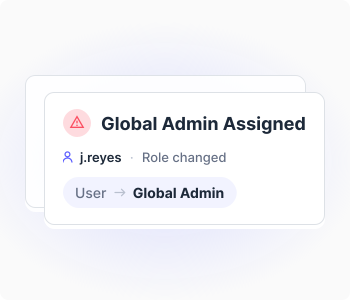
Single Event
Catch the action that is dangerous on its own.
Connect signals that isolated rules would miss.
Real-time rules, sequences, aggregation, correlations, and context-aware detection work together to turn isolated activity into high-confidence detections.
Find what gets missed in other tools. Aleph connects data across time, systems, identities, and assets to surface threats that would otherwise stay buried in the noise.
Catch the action that is dangerous on its own.
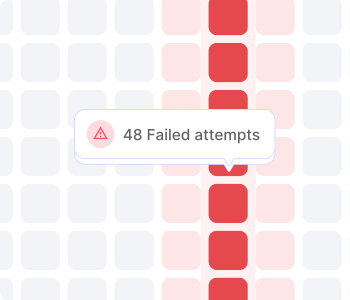
See the pattern hidden inside ordinary events.
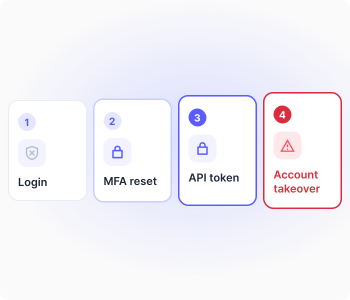
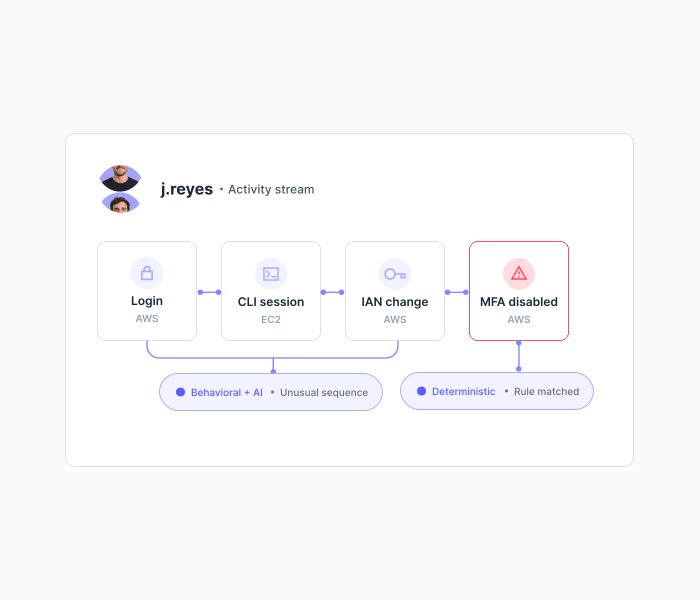
Catch what only becomes dangerous in the right order.
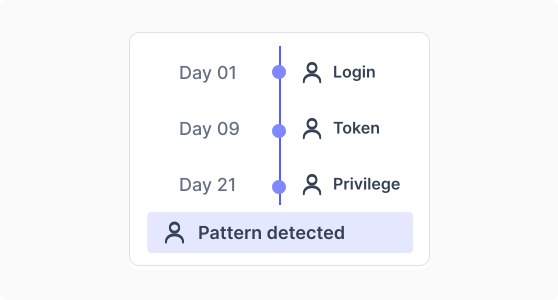
Keep slow attacks connected across hours, days, or weeks.
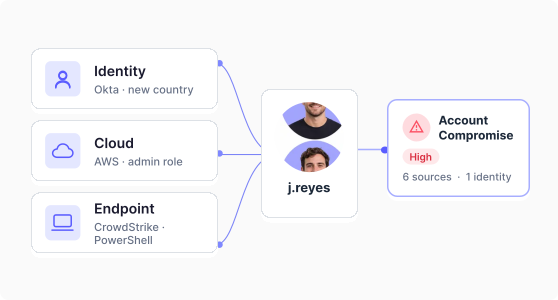
Connect identity, network, endpoint, cloud, and posture signals.
Great detection logic is only part of the equation. Aleph gives every detection better data to work with, in real time, with the context needed to make a better decision.
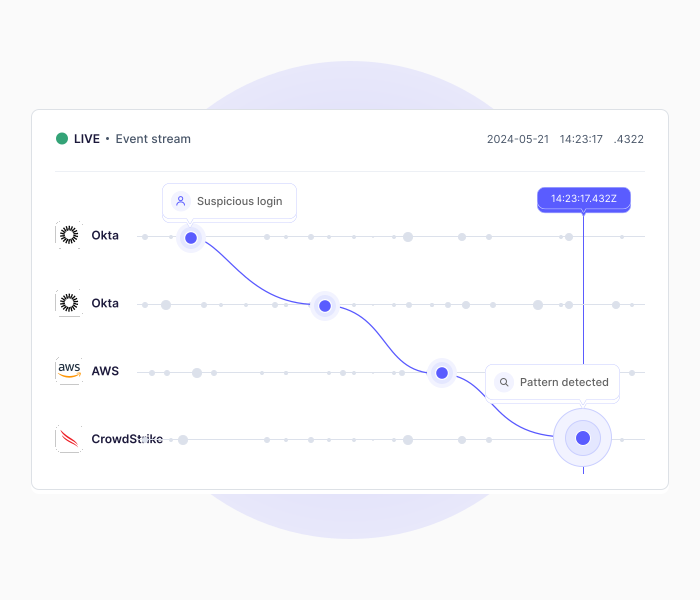
Signals are evaluated as they arrive, so patterns can be identified while the activity is still unfolding.
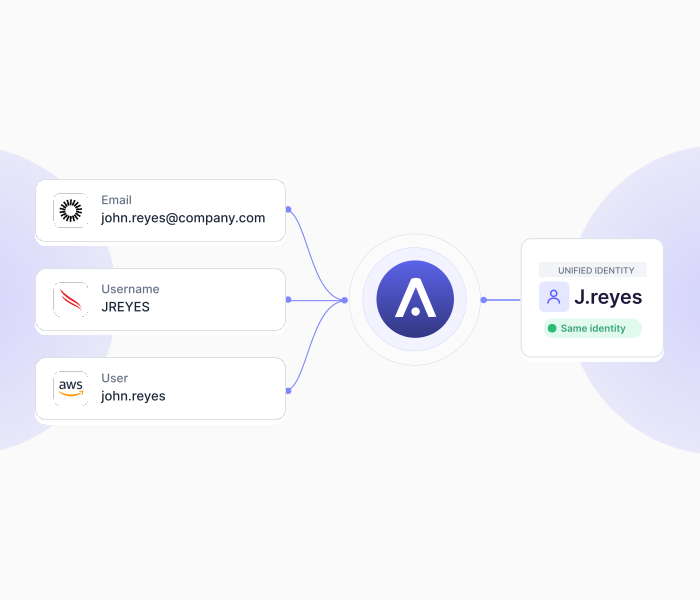
Aleph normalizes keys and values across identity, endpoint, cloud, network, and SaaS data, so one detection can work across the environment.
Identity, asset posture, vulnerabilities, exposure, location, threat intelligence, and historical activity can be attached to the signal in real time, before the rule is evaluated.
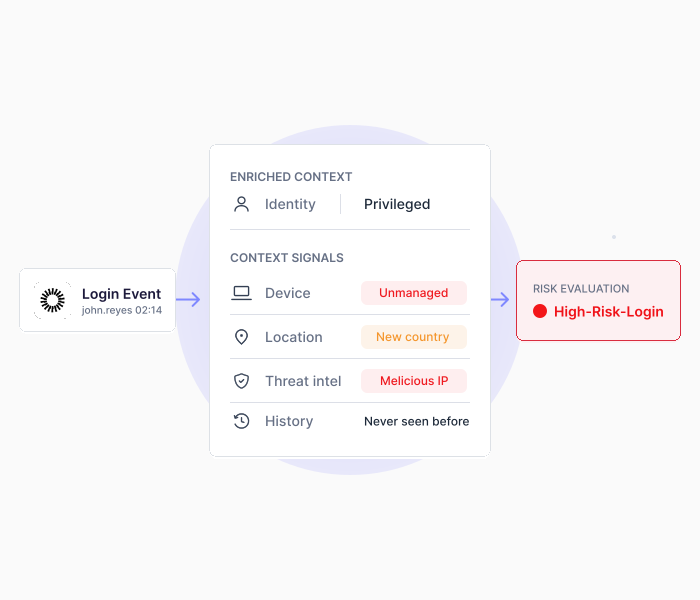
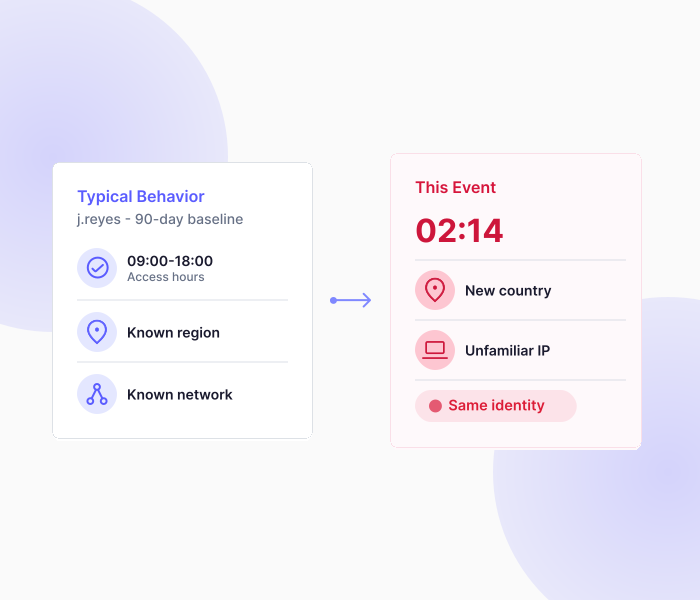
Historical behavior adds another layer of signal when an action is technically allowed, but significantly different from what normally happens.
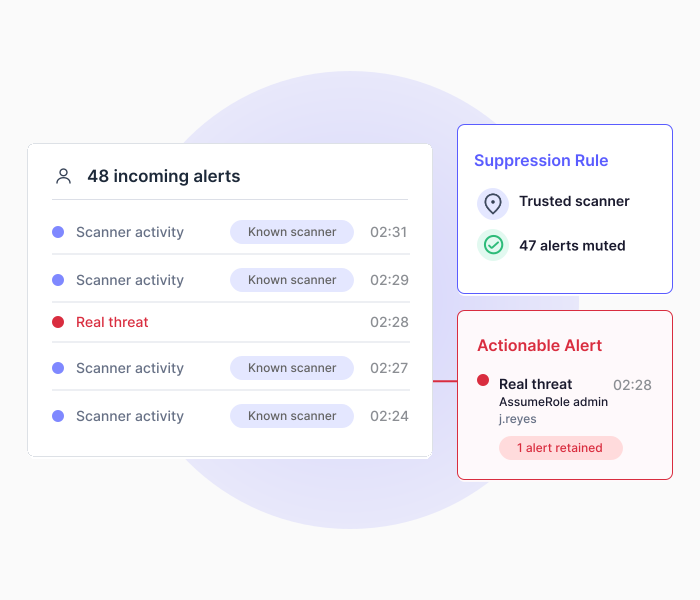
Trusted infrastructure, and approved activity can be excluded without making the underlying detection less sensitive everywhere else.
Every signal is enriched in the pipeline, before the engine decides.
Aleph uses the right detection method for every signal. Known patterns are caught with fast, deterministic logic. AI and behavioral analysis step in when history, context, and reasoning can reveal what rules alone miss.

Give analysts fewer alerts to validate and more detections worth acting on.
Surface high-confidence incidents earlier, so teams can move from detection to response faster.
Reduce the engineering effort required to build, tune, and maintain detection content across a complex security stack.
Turn existing identity, endpoint, cloud, and network data into stronger detections without adding another layer of manual investigation.
Traditional SIEMs typically detect on stored or indexed logs, then add context during investigation. Aleph brings normalization, enrichment, and correlation into the detection process itself, in real time.
Instead of evaluating “a machine started,” Aleph can evaluate “a production machine started, it is internet-facing, contains sensitive data, and has an exploitable vulnerability.”
That is a materially different level of detection. The engine can reason about the security meaning of the activity, not just the raw event. The result is stronger coverage, fewer false positives, faster triage, and less analyst and R&D effort spent reconstructing context afterward.
Aleph uses AI where it materially improves detection, while keeping the Detection Engine grounded in the precision and consistency security teams require. AI is most valuable when it adds reasoning that traditional logic cannot provide as effectively. By combining both approaches, Aleph can benefit from AI without sacrificing explainability, predictability, or control over critical detection logic.
Aleph does more of the contextual work before the analyst starts investigating. Identity, asset, historical activity, related signals, and other relevant context can already be connected to the incident.
When deeper investigation is required, Aleph can retrieve historical activity, follow relationships across systems, reconstruct sequences, and surface the evidence that matters. Analysts spend less time gathering information and more time deciding what happened and what to do next.
Yes. This is one of the most important use cases for Aleph.
Modern attacks rarely stay inside one security product. A suspicious identity event may appear in Okta, followed by endpoint activity in CrowdStrike and a privileged action in AWS. Evaluated separately, none may be enough to identify the attack.
Aleph normalizes those sources, connects the underlying identities and assets, enriches the activity in real time, and evaluates it as one security story. Without that normalization and context, these are exactly the kinds of attacks that can be missed or only discovered later through manual investigation.
Yes. Aleph can detect patterns that develop over seconds, hours, days, or much longer periods.
A key part of this is Aleph’s data layer. Historical security data can be retained, restored or re-streamed when needed, and brought back into the analysis when it becomes relevant to current activity.
That means historical behavior can strengthen a current detection and provide deeper context during investigation. This is especially important for password spraying, reconnaissance, staged persistence, and gradual privilege escalation, where the full pattern may only become visible over time.
In many environments, significantly.
Security teams often rely on engineering to build parsers, maintain pipelines, connect data, write custom queries, or expose information the SIEM cannot provide directly.
Aleph brings more of that capability into the security platform through normalization, enrichment, flexible detection logic, and historical data access. That gives the security team greater independence and returns engineering capacity to the rest of the business.
In suitable environments, Aleph targets up to 80% lower total SIEM cost compared with legacy platforms.
The savings extend beyond storage and licensing. They can also come from lower infrastructure overhead, fewer enrichment workflows, less custom engineering, simpler maintenance, and less analyst time spent on noise.
That is why the meaningful comparison is total operating cost, not simply price per GB.
Yes.
Aleph can ingest internal and business-application data alongside standard security telemetry, enabling detection of organization-specific risks such as unusual access to sensitive customer data, suspicious administrative behavior, or abuse inside proprietary systems.
Where standard integrations are not enough, Aleph can also build custom integrations, parsers, and supporting logic needed to reach the required level of monitoring. The goal is not to limit security coverage to what comes out of the box, but to provide the visibility the environment actually requires.
Aleph can fully replace an existing SIEM, and in many environments that is the most efficient architecture.
It can also operate alongside an existing SIEM when there is a specific reason to keep both, such as a phased migration, a defined legacy requirement, or a particular data or operational use case.
The right architecture depends on the environment, but Aleph is designed to serve as the primary SIEM rather than simply adding another layer on top of one.
For supported environments, Aleph can go live in approximately 60 minutes.
Larger deployments can then expand incrementally by adding data sources, detections, and use cases.
That allows teams to start validating detection quality and operational value quickly, without waiting for a long organization-wide SIEM migration.

"Before Aleph, critical context was spread across different systems. Now we get a much clearer picture around every event. Aleph's enrichment brings the missing context together and makes investigations faster and more complete."
Nir R.
CISO
30%
decrease in first reply time
+10%
annual increase in NPS
Aleph turns your security data into enriched answers, clear investigations, and coordinated action.
Book a demo